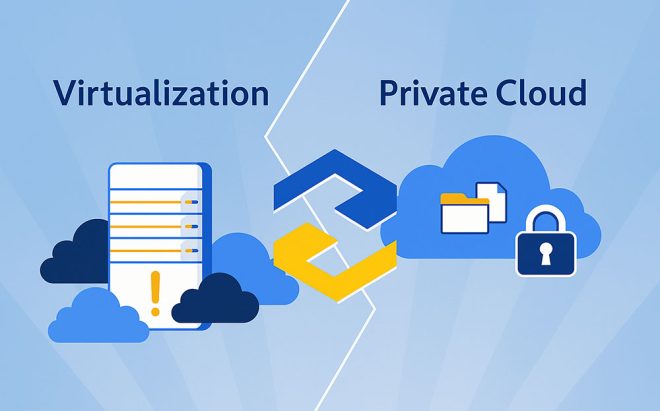
The difference between Cloud Server and Virtual Private Server (VPS): The Best Option for Web Hosting
Table of Content
- What is a Virtual Private Server (VPS) and How Does it Work?
- Advantages of Virtual Private Server (VPS)
- Disadvantages of VPS; Are These Limitations Important to You?
- What is a Cloud Server and How Does it Work?
- Advantages of Cloud Server
- Disadvantages of Cloud Server
- Comprehensive Comparison of Cloud Server and VPS
- Which Option Is Right for You?
- Final Conclusion
Cloud servers and Virtual Private Servers (VPS) are two primary options for hosting websites and applications in today’s digital world. With the rapid growth of online businesses, choosing a reliable and scalable infrastructure has become more important than ever. But the question remains: Between a Cloud Server and a Virtual Private Server (VPS), which is the better option for you?
The answer to this question is not simple, as the final choice depends on factors such as project type, budget, technical level, traffic volume, and resource requirements. Each of these two servers has its own advantages, disadvantages, and features that make them suitable for different groups of users.
In this article, by thoroughly examining the key differences between cloud servers and virtual private servers, along with introducing the advantages, disadvantages, and applications of each, we will help you make an intelligent, practical choice that meets the needs of your business.
What is a Virtual Private Server (VPS) and How Does it Work?
VPS stands for Virtual Private Server. In this type of hosting, a physical server is divided into several independent sections using virtualization software (such as KVM, VMware, or OpenVZ). Each section acts as a separate server with dedicated resources (such as RAM, CPU, storage space, and operating system).
In reality, in a VPS environment, it’s like having a real server, while in principle you share it with other users, but your resources are limited and dedicated. To better understand this hosting, be sure to read the content “What is a Virtual Server?“.
Advantages of Virtual Private Server (VPS)
1. Complete Control and High Customization Capability
One of the most prominent advantages of using a Virtual Private Server (VPS) is complete control over the server environment. Unlike shared hosting, where you only have limited access to settings, in VPS you have complete freedom to install your desired operating system and implement any type of software, module, framework, or settings according to the needs of your project. This level of customization is a key advantage for developers, owners of specialized websites, and businesses that require specific configurations.
2. Cost-Effectiveness Compared to Dedicated Servers
Although VPS offers capabilities close to a dedicated server, its cost is significantly lower. This feature makes VPS an ideal option for startups, medium-sized websites, online stores, and growing projects. You can receive dedicated resources such as CPU, RAM, and storage space with a reasonable budget, without needing to invest heavily in purchasing or renting a complete physical server.
3. Better Performance Compared to Shared Hosting
In shared hosting, server resources like RAM and CPU are shared among all users; however, in VPS, you have dedicated and guaranteed resources. This ensures that your website’s performance is more stable, faster, and without sudden fluctuations. Such performance directly and positively impacts user experience and plays a significant role in improving website SEO, as search engines like Google give better rankings in their search results to websites with high speed and stability.
4. Higher Security Compared to Shared Hosting
With VPS, you are the only user with access to your server environment, whereas in shared hosting, multiple users can operate in the same environment. This directly increases the level of security. You can install dedicated firewalls, advanced security settings, and even professional antivirus software on your server and professionally protect sensitive business or customer information.
5. Ability to Upgrade Resources as the Project Grows
As your website or online project grows, you may need more resources. Fortunately, most VPS providers offer the ability to upgrade server resources (such as RAM, CPU, or disk space) without the need to migrate to a new server. This flexibility allows you to upgrade your server according to the growth and needs of your business without interrupting service.
Disadvantages of VPS; Are These Limitations Important to You?
Despite all the advantages, VPS also has disadvantages. The most important is the limitation in scalability. Unlike cloud servers, where resources can be easily increased or decreased, in VPS the amount of resources is limited to the hardware capacity of the physical server.
On the other hand, VPS management and maintenance require technical knowledge. If you are not a professional server administrator, you may need to hire a specialist or use managed services.
What is a Cloud Server and How Does it Work?
A Cloud Server is a type of hosting that dynamically and instantly provides you with the necessary resources through a network of multiple physical servers. Unlike a VPS, where resources are provided from a specific server, in a Cloud Server your data and resources are provided and supported by multiple servers in a datacenter or even multiple geographical locations.
In simple terms, if one physical server fails, the Cloud Server automatically transfers the load to other servers without your service experiencing any downtime. To better understand cloud hosting, we recommend that you read the content “What is a Cloud Server and What are its Applications?“.
Advantages of Cloud Server
1. Exceptional Scalability; Growth Without Limits
One of the most important and impressive advantages of a cloud server is its high scalability and flexibility in resource allocation. Unlike traditional servers that require migration or infrastructure changes to upgrade resources, with cloud servers, you can increase or decrease the amount of CPU, RAM, or storage you need with just a few clicks. This feature is crucial for growing businesses, online stores, and applications with variable traffic, as they can adapt their resources to the current conditions without interrupting service.
2. High Stability; Always Be Available
A cloud server operates on a distributed infrastructure. This means that your data is stored simultaneously on multiple servers in different locations. In the event of hardware failure or disruption in one of the servers, other servers immediately take over, and your services continue without interruption. This architecture makes Cloud Server have very high stability and availability (High Availability), which is especially important for critical websites and applications such as online stores or financial services.
3. Data Security: Peace of Mind for Businesses
Another key advantage of cloud servers is advanced security and multi-layered data protection. Distributed storage and the use of automatic backup systems minimize the possibility of data loss. Also, most cloud server providers offer powerful firewalls, data encryption, and advanced access controls, which collectively lead to an increased level of security compared to traditional servers.
4. Pay-as-you-go: Smart Cost Savings
The economic model of cloud servers is based on Pay-as-you-go. This means you only pay for the resources you actually use. This model is ideal for projects with fluctuating or uncertain traffic, startups, seasonal advertising campaigns, or software with dynamic resource consumption. Unlike traditional servers that have a fixed monthly cost, Cloud Server helps you avoid extra costs and optimize resource consumption.
5. Easy Management and Flexibility in Infrastructure
Most cloud server providers offer a professional yet user-friendly management panel. These panels provide features such as real-time resource monitoring, backup creation, operating system installation, user management, and more. Also, due to the ability to connect APIs and DevOps services, cloud servers are an ideal option for software development teams.
Disadvantages of Cloud Server
Despite the many advantages, using a Cloud Server also has its challenges. One of these challenges is variable costs. If your resource consumption increases, the final cost may be higher than expected.
Also, to effectively manage these servers, you need to be familiar with cloud infrastructure concepts, APIs, and advanced management panels, which may be challenging for some novice users.
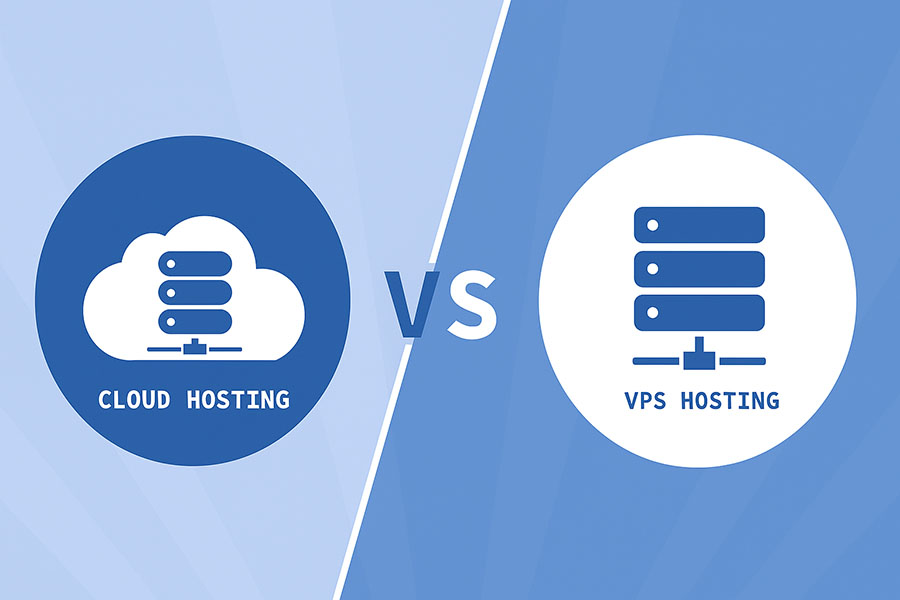
Comprehensive Comparison of Cloud Server and VPS
In the table below, you can see the main differences between these two types of hosting:
| Feature | VPS (Virtual Private Server) | Cloud Server |
| Scalability | Limited to the physical server | Dynamic and instantaneous |
| Stability | Disrupted in case of server failure | Resources are supplied from other servers |
| Cost | Fixed monthly | Variable based on consumption |
| Security | Dependent on user configuration | Higher, due to resource distribution |
| Management | Requires technical expertise | Simpler graphical panels |
| Flexibility | Limited | Very high and customizable |
Which Option Is Right for You?
The answer to this question depends on your needs, goals, and budget:
- If you are looking for a cost-effective solution with specific resources and have technical knowledge, a VPS is a suitable option.
- If your project requires high scalability, stability, and greater security, a Cloud Server is an ideal choice.
- For small to medium-sized websites with predictable traffic, a VPS is an economical and efficient choice.
- For complex applications, high-traffic online stores, and rapidly growing startups, a Cloud Server is recommended.
Final Conclusion
Choosing between a Cloud Server and a Virtual Private Server is a strategic decision for any online business. This decision should be based on traffic volume, level of technical expertise, budget, and the need for stability and scalability.
In conclusion, although both solutions have significant advantages, a Cloud Server will be more forward-looking and flexible in the path of business growth and development.
Frequently Asked Questions (FAQ)
۱. Is a Cloud Server more secure than a VPS?
Yes. Due to data storage on multiple servers and a distributed structure, a Cloud Server offers higher security.
۲. Is a VPS a cheaper option than a Cloud Server?
In most cases, yes. VPS usually has a fixed cost and is more economical for smaller projects.
3. Is it possible to upgrade VPS resources?
Yes, but the upgrade is limited to the resources available on the physical server. This limitation does not exist in a Cloud Server.
4. Which server is better for startups?
If your startup is growing rapidly and needs high flexibility, a Cloud Server is a better option. However, for startups with limited resources and a need for cost control, VPS is a good choice.